
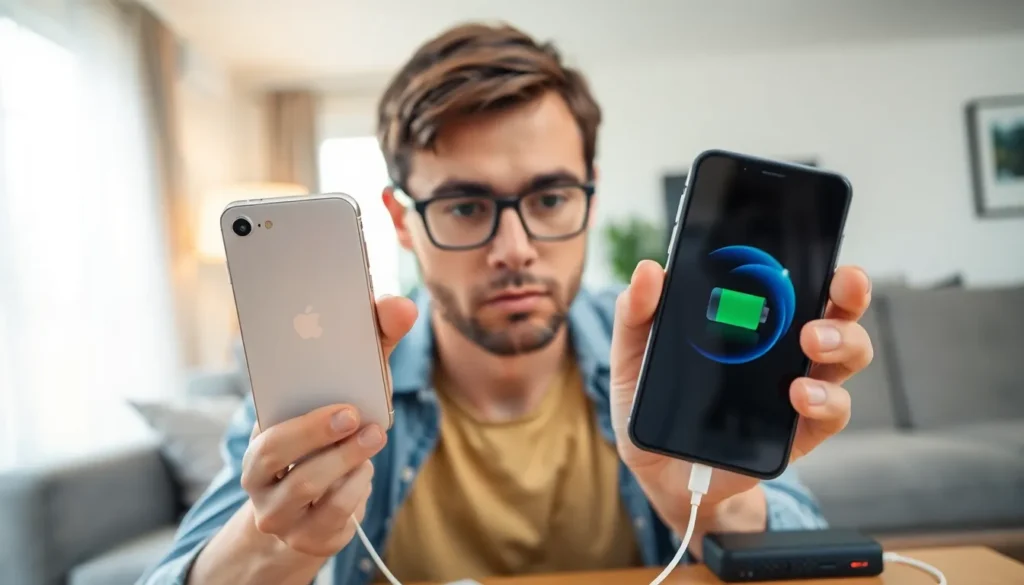
Imagine this: you’re out with friends, and your iPhone is gasping for battery life while your buddy’s Android is still going strong. You might wonder if there’s a way to share that precious juice between the two. After all, in a world where smartphones reign supreme, why should battery life be a solo act?
Overview of Battery Sharing Technology
Battery sharing technology allows devices to exchange power with each other. Several smartphones incorporate features that enable charging other devices via USB, making this possible. Apple’s iPhone, for example, supports wired charging, typically with USB-C connections. Android devices often feature similar capabilities, especially newer models.
Different methods exist for battery sharing. Wireless charging stands out as a popular option. Many Android phones support Qi wireless technology. Apple’s latest iPhones also utilize this standard, enabling potential compatibility. Users could place an iPhone on a compatible Android device to transfer battery life, provided both devices support this feature.
USB-C connections create another viable method for battery sharing. If an Android device features reverse charging, it can act as a power bank for an iPhone. Such reverse charging enables one device to draw power from another, effectively sharing battery reserves. Users must ensure compatible charging power levels between devices to avoid damaging them.
Limitations arise due to proprietary technology. Apple’s Lightning connector remains exclusive to iPhone models, complicating direct charging from Android devices. Moreover, charging speeds can vary significantly. Charging an iPhone using an Android device might result in slower transfer rates than expected.
Overall, while there is potential for battery sharing between Android and iPhone devices, limitations exist. Compatibility issues and charging standards may affect seamless power transfer between the two smartphones. Understanding these factors will help users navigate battery sharing more effectively.
Compatibility Between Android and iPhone

Battery sharing between Android and iPhone devices involves understanding their compatibility. Various factors influence this process, including charging protocols and physical connection requirements.
Differences in Charging Protocols
Charging protocols significantly affect battery sharing capabilities. Android devices commonly utilize USB-C and often support USB Power Delivery, which allows for higher power transfer. In contrast, iPhones use Apple’s proprietary Lightning port, limiting direct compatibility. Android’s reverse charging feature enables it to act as a power source for other devices, provided power levels match. Users should note that while iPhones support Qi wireless charging, Android models frequently offer quicker power transfer through wired connections.
Physical Connection Requirements
Physical connection requirements pose additional challenges. Most new Android devices feature USB-C ports, which facilitate various charging methods. Lightning connectors on iPhones, however, do not directly align with USB-C. Adapters can bridge this gap, yet they may not support all power configurations. Users must also consider compatibility with power specifications to ensure safe charging and prevent damage. Without the appropriate connectors or adapters, successful battery sharing remains complicated.
Methods for Sharing Battery Life
Sharing battery life between an Android device and an iPhone can be achieved through several methods. Users can explore various options that enhance inter-device compatibility.
Using Third-Party Accessories
Third-party accessories provide practical solutions for charging compatibility. Portable power banks designed for both Android and Apple devices facilitate charging anywhere. Certain adaptors also allow users to connect Lightning cables to USB-C ports. By ensuring that the accessory supports the required power level, users can effectively transfer battery life. Products that feature dual charging outputs can serve both devices at once. Always consider the capacity and quality of accessories to guarantee safe and efficient energy sharing.
Wireless Sharing Capabilities
Wireless charging allows for convenient battery sharing between compatible devices. Many newer Android phones support Qi technology to enable this feature. Simply placing an iPhone on a wireless charging pad connected to an Android device transfers energy. Some Android smartphones even support reverse wireless charging, making them power sources for iPhones. To use this feature effectively, both devices must be compatible with the same wireless charging standard. Checking manufacturers’ specifications ensures a seamless experience when sharing battery life wirelessly.
Potential Risks and Considerations
Battery sharing between Android and iPhone poses several risks and considerations that users should keep in mind. First, charging speed may not meet expectations, as Android devices often operate with different power levels than iPhones. Variability in charging speeds can frustrate users when attempting to share battery life.
Additionally, compatibility issues exist due to the proprietary Lightning connector used by iPhones. The lack of direct compatibility with USB-C ports on most Android devices complicates efforts to transfer power effectively. Adapters might help, but not all support the necessary power configurations, risking unsuccessful charging attempts.
Moreover, safety concerns arise when using third-party accessories. Relying on lower-quality adapters or chargers can lead to overheating, device damage, or even battery failure. Ensuring the use of reputable products reduces these risks.
Wireless charging adds another layer of consideration. While Android devices with Qi technology may wirelessly charge an iPhone, both devices must be compatible with the wireless standard. If they aren’t, users may encounter inefficiencies or total failure to charge.
Lastly, users should monitor battery levels throughout the sharing process. A sudden power drain on the Android device can leave both phones vulnerable to shutdowns. Being cautious about how much battery is shared and maintaining awareness of remaining power can enhance the user experience.
Recognizing these risks allows for more informed decisions about battery sharing. Prioritizing safety and compatibility ensures a smoother experience when sharing power between Android and iPhone devices.
Battery sharing between Android and iPhone devices is a feasible option but comes with its challenges. While technologies like USB-C and Qi wireless charging offer potential solutions for sharing power, compatibility issues can complicate the process. Users must consider factors such as charging speeds and the need for adapters to bridge the gap between different connectors.
By being aware of these limitations and taking necessary precautions, individuals can make informed decisions about sharing battery life. Utilizing third-party accessories can enhance compatibility and ensure a safer energy transfer. Ultimately, understanding the nuances of battery sharing can lead to a more convenient smartphone experience in today’s tech-driven world.

